 (1).webp)
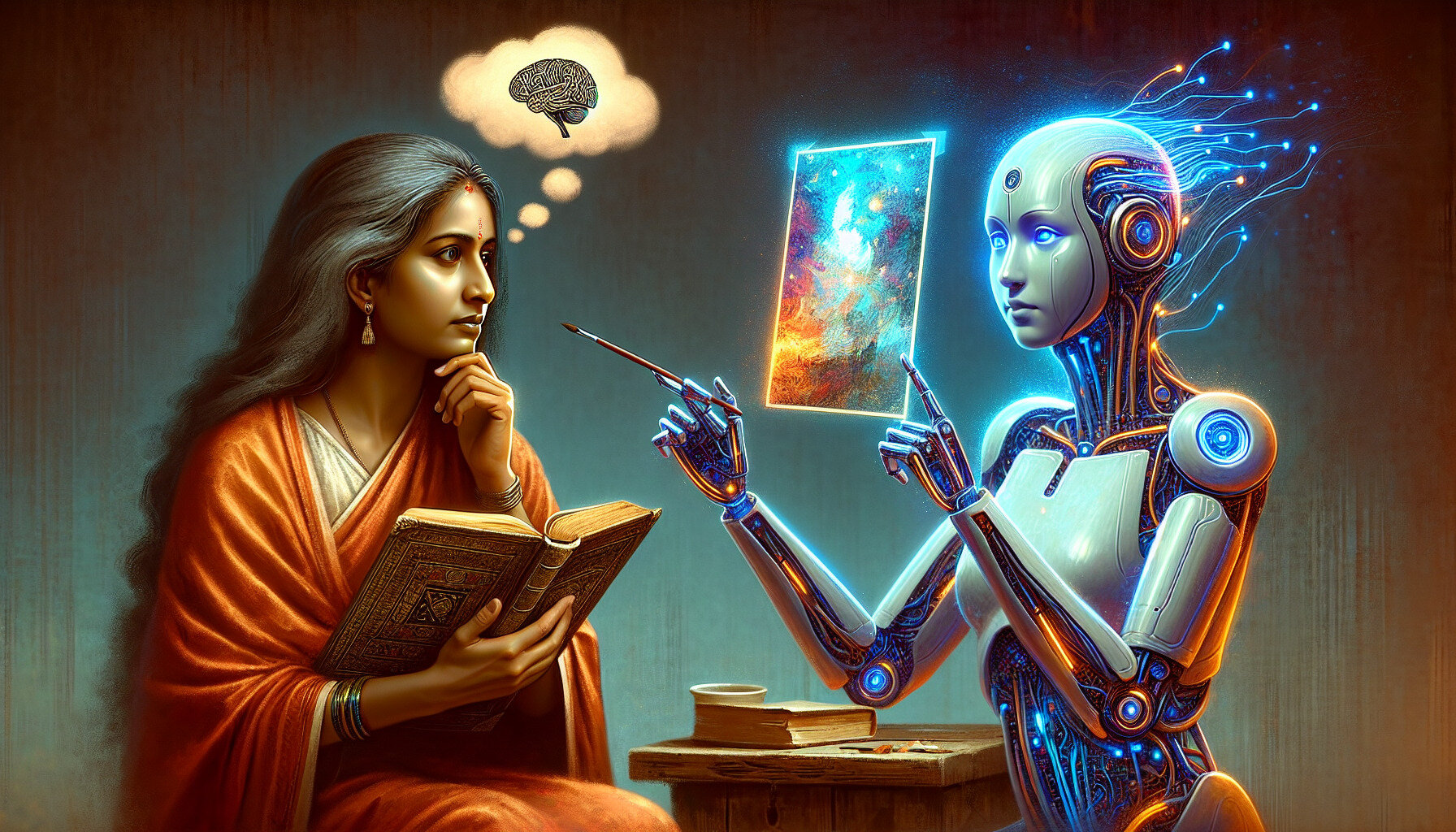
Will AI Replace Human Creativity? Exploring the Future of Art, Innovation, and Imagination
Artificial intelligence is rapidly transforming creative industries such as writing, music, design, and visual arts. AI tools can now generate images, compose music, and write articles within seconds. This has led to an important question: will AI replace human creativity?
While AI has impressive capabilities, creativity is more complex than pattern generation. It involves emotion, experience, intention, and cultural context—elements that remain deeply human.
What Is Creativity in Humans?
Human creativity is the ability to generate original ideas, solve problems in new ways, and express emotions through different forms. It is influenced by personal experiences, emotions, imagination, and cultural background.
Unlike machines, humans create with intent and meaning. A painting, song, or story is not just a combination of patterns but a reflection of lived experience.
What AI Can Do in Creative Fields
AI has made significant progress in generating creative content:
- Writing articles, stories, and marketing copy
- Creating digital art and illustrations
- Composing music and soundtracks
- Designing logos and visual concepts
- Suggesting ideas for creative projects
AI works by analyzing large datasets and identifying patterns. It then generates outputs based on probabilities rather than personal experience or emotion.
Where AI Excels in Creativity
AI offers several advantages in creative work:
Speed and Efficiency
AI can produce creative outputs in seconds, dramatically reducing production time.
Idea Generation
AI can provide multiple variations of ideas, helping creators explore possibilities quickly.
Accessibility
People without technical skills can now create art, music, and content using AI tools.
Support for Professionals
Artists and designers use AI to enhance workflows, not replace them.
Limitations of AI Creativity
Despite its strengths, AI has clear limitations:
Lack of Emotion and Experience
AI does not feel emotions or live experiences. It can simulate emotional expression but does not truly understand it.
No Original Intent
AI does not create with purpose. It generates content based on patterns in data rather than personal motivation.
Dependence on Existing Data
AI learns from existing human-created content, meaning it cannot truly create something entirely independent of human input.
Limited Cultural Understanding
Subtle cultural meaning, symbolism, and context are often difficult for AI to fully grasp.
Will AI Replace Human Creativity?
The short answer is no, but it will change it significantly.
AI is unlikely to replace human creativity entirely because creativity is not just production—it is expression. However, AI will increasingly become a powerful tool that supports and enhances creative processes.
Instead of replacing artists, writers, and designers, AI is more likely to:
- Assist in idea generation
- Automate repetitive tasks
- Speed up production workflows
- Expand creative possibilities
This means creativity will evolve rather than disappear.
The Future: Human and AI Collaboration
The future of creativity will likely be a collaboration between humans and AI. Humans will provide vision, emotion, and meaning, while AI will offer speed, variation, and technical execution.
This partnership can lead to new forms of creativity that were not possible before.
For example:
- Writers using AI for brainstorming and editing
- Designers using AI for concept exploration
- Musicians using AI for sound experimentation
Ethical and Philosophical Questions
The rise of AI creativity raises important questions:
- Who owns AI-generated content?
- Can machine-generated art have cultural value?
- Does reliance on AI reduce human originality?
These questions will shape how society defines creativity in the future.
Yorumlar