 (1).webp)
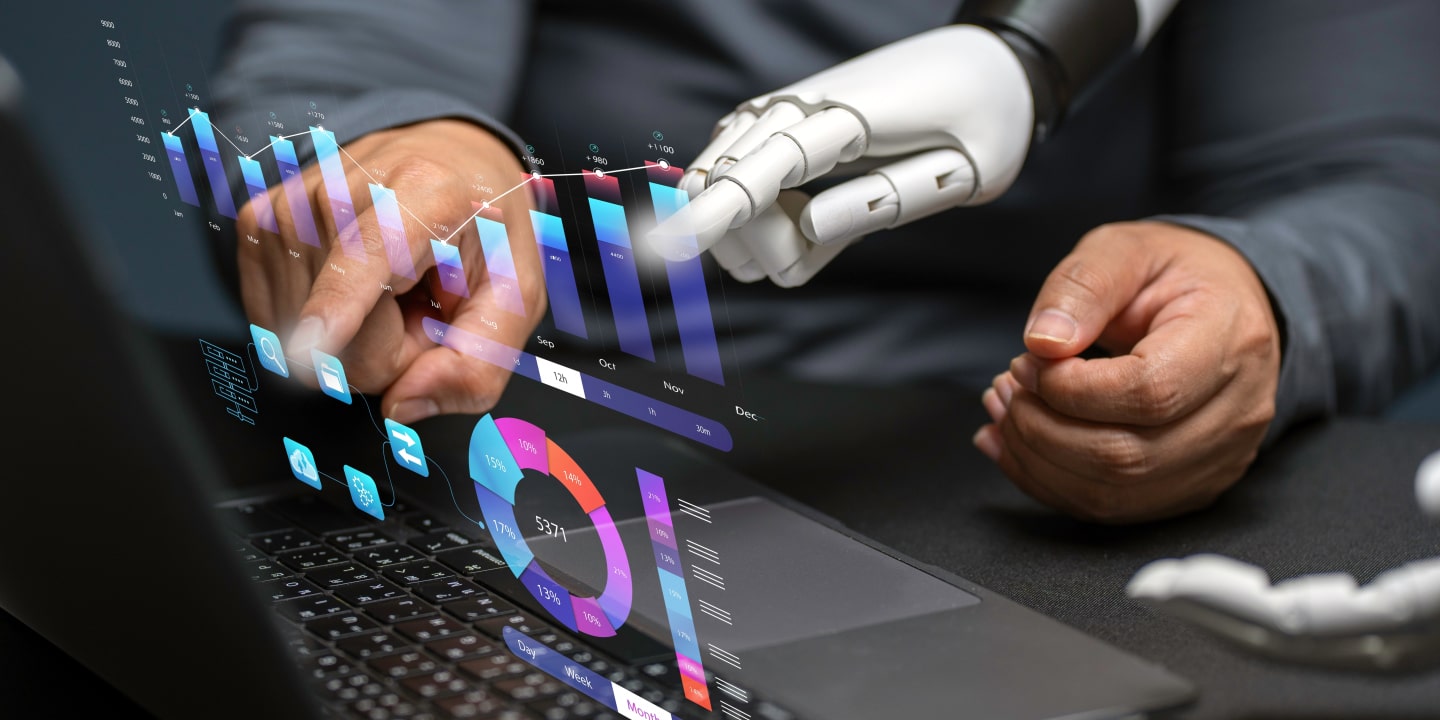
How AI Is Shaping Decision-Making: The Role of Artificial Intelligence in Everyday Choices
How AI Is Shaping Decision-Making
Artificial intelligence is becoming an increasingly important part of the way people make decisions. From personalized recommendations and online shopping to business analytics and healthcare systems, AI can analyze large amounts of information and provide suggestions within seconds.
As artificial intelligence becomes more integrated into everyday life, understanding how AI is shaping decision-making is essential. While AI can make decisions faster and help people identify useful patterns, it can also introduce new challenges involving trust, bias, privacy, and human judgment.
How AI Supports Decision-Making
AI systems can process enormous amounts of information much faster than humans. By identifying patterns in data, they can provide predictions, recommendations, and possible solutions.
For example, an AI-powered system can analyze customer behavior and recommend products, while a business platform can examine sales data to help managers identify trends.
This makes AI particularly useful when decisions involve large and complex datasets.
AI and Everyday Decisions
Many people interact with AI decision-making systems without even realizing it.
Search engines determine which results to display, streaming platforms recommend content, navigation applications suggest routes, and online stores personalize product recommendations.
These systems can save time by narrowing down choices. Instead of evaluating hundreds of possibilities, users are presented with a smaller selection based on their previous behavior and available data.
However, convenience can also influence personal preferences. When people repeatedly receive algorithmic recommendations, these suggestions can gradually shape what they watch, buy, read, and explore.
AI in Business Decision-Making
Businesses are among the biggest users of AI-powered decision-making tools. Companies can use artificial intelligence to analyze market trends, customer behavior, operational data, and financial information.
AI can support decisions involving:
- Marketing strategies
- Customer segmentation
- Inventory management
- Sales forecasting
- Fraud detection
- Business operations
- Risk assessment
Instead of relying exclusively on intuition, decision-makers can combine their experience with data-driven insights.
AI and Healthcare Decisions
Artificial intelligence is also being explored and used in healthcare for tasks such as analyzing medical images, identifying patterns in patient data, and supporting clinical decision-making.
The important point is that AI should generally function as a support tool rather than an unquestioned replacement for professional judgment. Healthcare decisions can involve complex circumstances that may not be fully represented in a dataset.
Human expertise, context, communication, and ethical considerations remain important.
The Benefits of AI-Based Decision-Making
AI can provide several important advantages when used responsibly.
Faster Analysis
AI can examine large datasets rapidly, allowing users to obtain insights without manually reviewing every piece of information.
Data-Driven Insights
Artificial intelligence can identify patterns that may be difficult for humans to notice, particularly when datasets are large and complex.
Consistency
Automated systems can apply the same defined process repeatedly, which can be useful for certain routine decisions.
Personalized Recommendations
AI can analyze individual preferences and provide recommendations tailored to specific users.
Reduced Routine Work
Automating repetitive analytical tasks allows people to spend more time on complex problems that require judgment and creativity.
The Risks of AI Decision-Making
AI does not automatically produce objective or perfect decisions. Its output depends on its design, data, assumptions, and implementation.
Algorithmic Bias
If training data contains biases or does not adequately represent certain groups, an AI system can reproduce or amplify those patterns.
Overreliance on AI
One of the biggest risks is assuming that an AI recommendation is always correct. Users may accept an automated answer without checking the reasoning or considering alternative options.
Lack of Transparency
Some advanced AI systems can be difficult to interpret. When users do not understand why a system produced a particular recommendation, it can become harder to evaluate the decision.
Privacy Concerns
AI systems often depend on large amounts of data. The collection and use of personal information therefore require appropriate privacy and security practices.
AI Should Support Human Judgment
The most effective approach is not necessarily choosing between humans and AI. Instead, people can use AI as a decision-support system.
AI can handle data analysis, pattern recognition, and repetitive calculations, while humans can contribute context, values, experience, creativity, and ethical judgment.
This combination can create a more balanced decision-making process.
How to Make Better Decisions with AI
Using AI effectively requires a critical mindset. Before accepting an AI recommendation, users should consider several questions:
- What information was used to generate this recommendation?
- Could the data contain errors or bias?
- Are there alternative explanations?
- Is the decision important enough to require human verification?
- Can the recommendation be independently checked?
These simple questions can help prevent blind dependence on artificial intelligence.
The Future of AI and Decision-Making
AI is likely to become even more deeply integrated into decision-making as technology advances. Future systems may provide increasingly personalized predictions and real-time recommendations across work, education, transportation, finance, and everyday digital experiences.
The biggest change may not be that AI makes every decision for humans. Instead, people may increasingly make decisions together with AI systems.
This creates a new model of intelligence in which humans provide judgment and purpose while machines provide computational power and data-driven insights.
Yorumlar