 (1).webp)
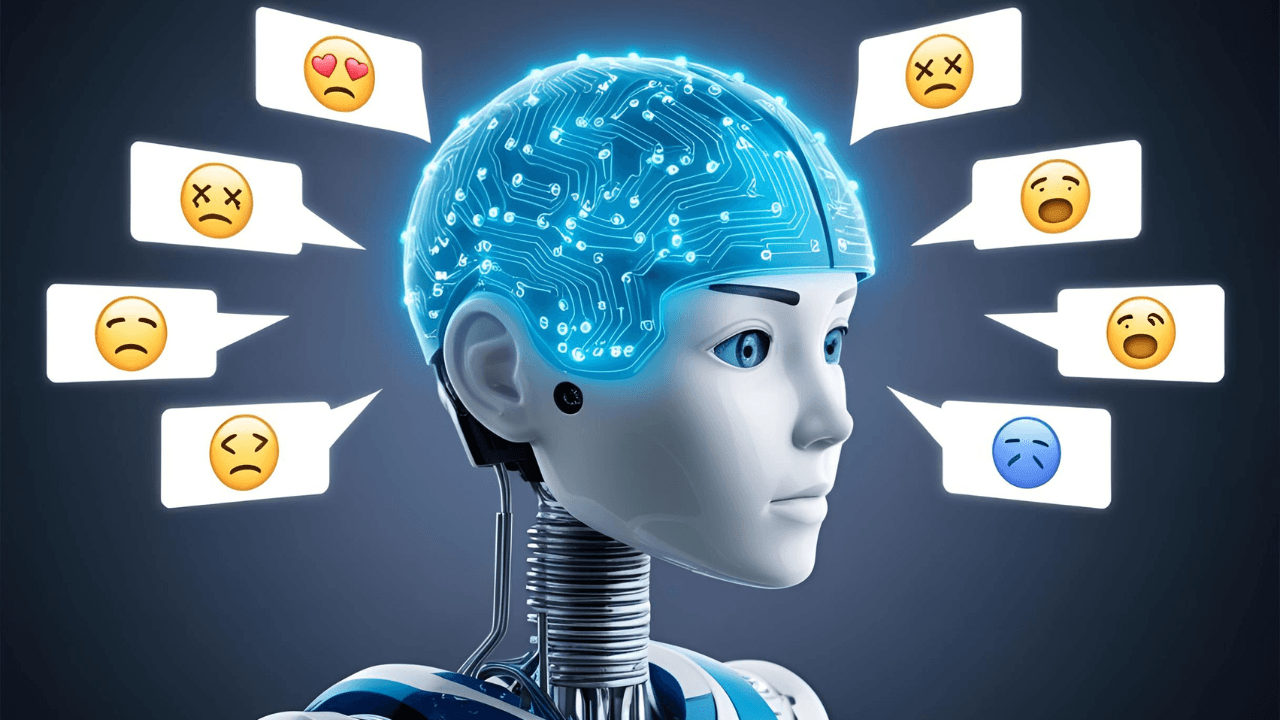
Can Machines Understand Emotions? How Artificial Intelligence Interprets Human Feelings
Emotions are a core part of human experience, shaping communication, decision-making, and relationships. With the rise of artificial intelligence, a major question has emerged: can machines understand emotions?
Modern AI systems can recognize facial expressions, analyze tone of voice, and detect emotional patterns in text. However, whether this counts as true emotional understanding is still widely debated.
How Machines Detect Emotions
AI does not “feel” emotions, but it can detect patterns associated with emotional states. This process is known as emotion recognition or affective computing.
AI systems typically analyze:
- Facial expressions through computer vision
- Voice tone, pitch, and speed in speech
- Word choice and sentiment in text
- Behavioral patterns such as typing speed or interaction style
By combining these signals, AI can estimate whether a person is happy, sad, angry, or neutral.
Emotion Recognition in Text (Sentiment Analysis)
One of the most common methods AI uses is sentiment analysis. This involves analyzing written language to determine emotional tone.
For example:
- Positive words may indicate happiness or satisfaction
- Negative words may suggest anger or sadness
- Neutral language may reflect objectivity or lack of emotion
However, sarcasm, irony, and cultural differences can make accurate interpretation difficult.
Facial Expression and Voice Analysis
AI-powered systems can also interpret emotions through physical cues.
Facial recognition models analyze micro-expressions such as:
- Smiling
- Frowning
- Eye movement
Voice analysis examines:
- Tone and pitch
- Speech rhythm
- Intensity of sound
These signals help AI make probabilistic guesses about emotional states.
Can AI Truly Understand Emotions?
Despite these capabilities, AI does not truly understand emotions in the human sense. It does not experience feelings such as joy, sadness, or empathy.
Instead, AI:
- Recognizes patterns linked to emotions
- Maps data to predefined emotional categories
- Produces responses based on statistical models
This means AI simulates emotional understanding rather than experiencing it.
The Difference Between Recognition and Understanding
There is a critical difference between identifying emotions and understanding them.
- Recognition: Detecting signs of emotion from data
- Understanding: Experiencing and interpreting emotions with awareness
Humans understand emotions through personal experience and empathy. AI only processes external signals without inner awareness.
Applications of Emotional AI
Even without true emotional understanding, AI is widely used in emotional analysis:
- Customer service chatbots detecting user frustration
- Mental health apps monitoring mood patterns
- Marketing systems analyzing consumer reactions
- Educational tools adapting to student engagement
- Virtual assistants adjusting tone of response
These applications improve user experience and personalization.
Limitations of Emotional AI
AI emotion detection has several limitations:
- Misinterpretation of sarcasm or context
- Cultural differences affecting emotional expression
- Lack of true empathy or consciousness
- Over-reliance on data accuracy
- Privacy concerns in emotional monitoring
These limitations show that emotional AI is still far from perfect.
Ethical Concerns
The ability of machines to analyze emotions raises ethical questions:
- Should AI be allowed to read human emotions?
- How should emotional data be stored and used?
- Can emotional manipulation occur through AI systems?
- Where is the line between helpful assistance and intrusion?
These concerns highlight the need for responsible AI development.
The Future of Emotion-Aware AI
Future AI systems are expected to become more advanced in recognizing emotional states with higher accuracy. They may better understand context, personality, and behavioral patterns.
However, even as technology improves, emotional experience itself is likely to remain uniquely human.
AI may become better at responding to emotions, but not truly feeling them.
Yorumlar